Our Nation
National Symbols
The flag, anthem, motto, and emblems that represent the Zambian people and their shared identity.
| Official Name | Republic of Zambia |
|---|---|
| Capital City | Lusaka |
| Independence | 24 October 1964 |
| National Motto | One Zambia, One Nation |
| National Anthem | Stand and Sing of Zambia, Proud and Free |
| National Bird | African Fish Eagle (Haliaeetus vocifer) |
| Currency | Zambian Kwacha (ZMW) — Kwacha means “dawn” |
| Official Language | English (72 Zambian languages also spoken) |
| Current President | Hakainde Hichilema (since 24 August 2021) |
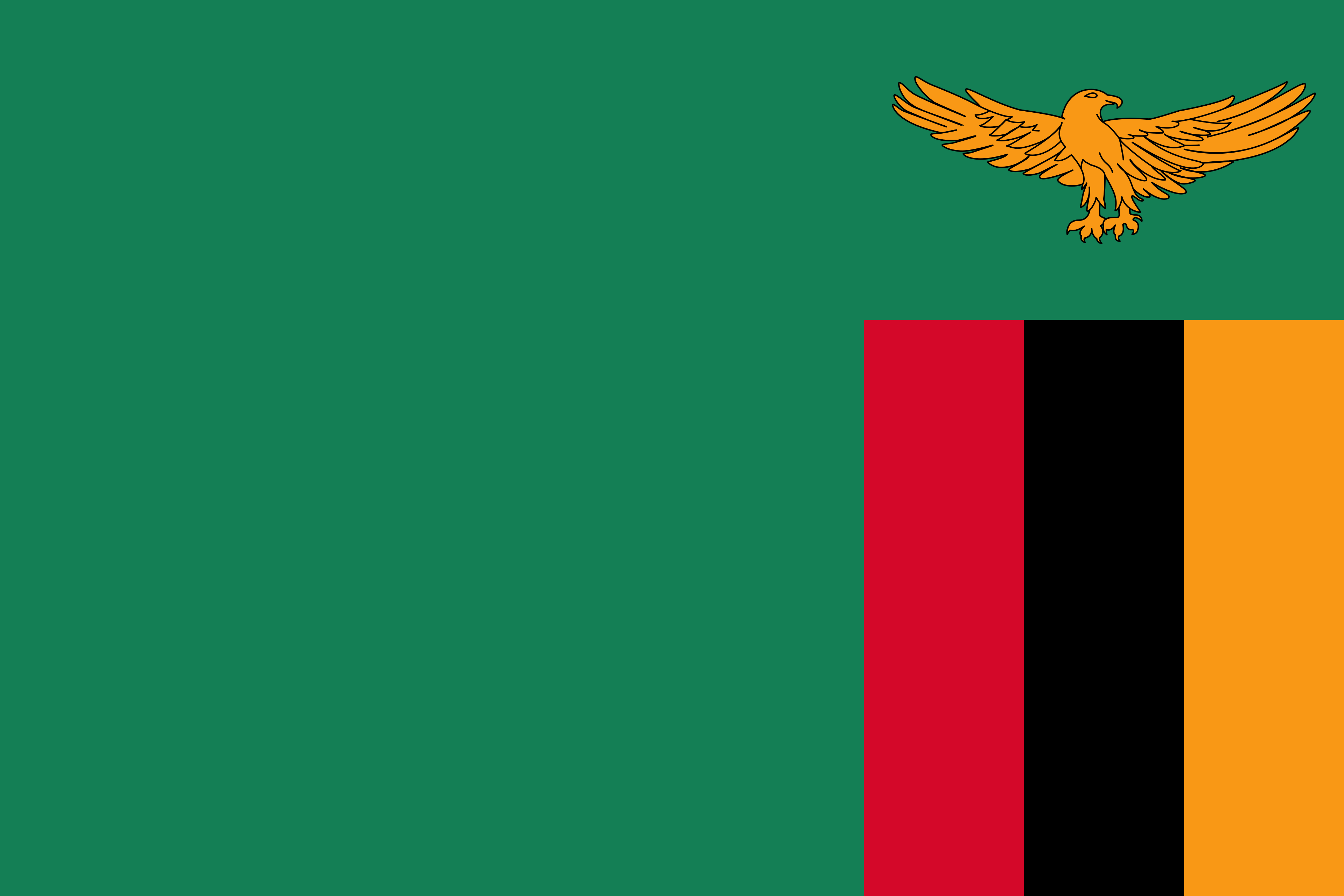
The National Flag
Adopted at independence on 24 October 1964, the Zambian flag is immediately recognisable by its distinctive design: a green field with three vertical stripes at the fly, and an African Fish Eagle soaring above them.
Each element carries meaning:
The African Fish Eagle, depicted in orange above the stripes, represents the ability of Zambians to rise above the nation’s challenges and soar to greater heights. It is also the national bird.
National Anthem
Stand and Sing of Zambia, Proud and Free was adopted at independence in 1964. The melody was composed by Enoch Sontonga — originally written for “Nkosi Sikelel’ iAfrika” — and the words were written by a group of Zambian citizens through a national competition.
The anthem’s three verses move from national pride, to African brotherhood, to the unity expressed in the national motto: One Zambia, One Nation. The eagle imagery in verse three echoes the national flag.
The anthem is sung in English, Zambia’s official language, at national ceremonies, sporting events, and in schools across the country.
Stand and Sing of Zambia, Proud and Free
Stand and sing of Zambia, proud and free,
Land of work and joy in unity,
Victors in the struggle for the right,
We have won freedom’s fight.
All one, strong and free.
Africa is our own motherland,
Fashion’d with and blessed by God’s good hand,
Let us all her people join as one,
Brothers under the sun.
All one, strong and free.
One land and one nation is our cry,
Dignity and peace ’neath Zambia’s sky,
Like our noble eagle in its flight,
Zambia, praise to thee.
All one, strong and free.
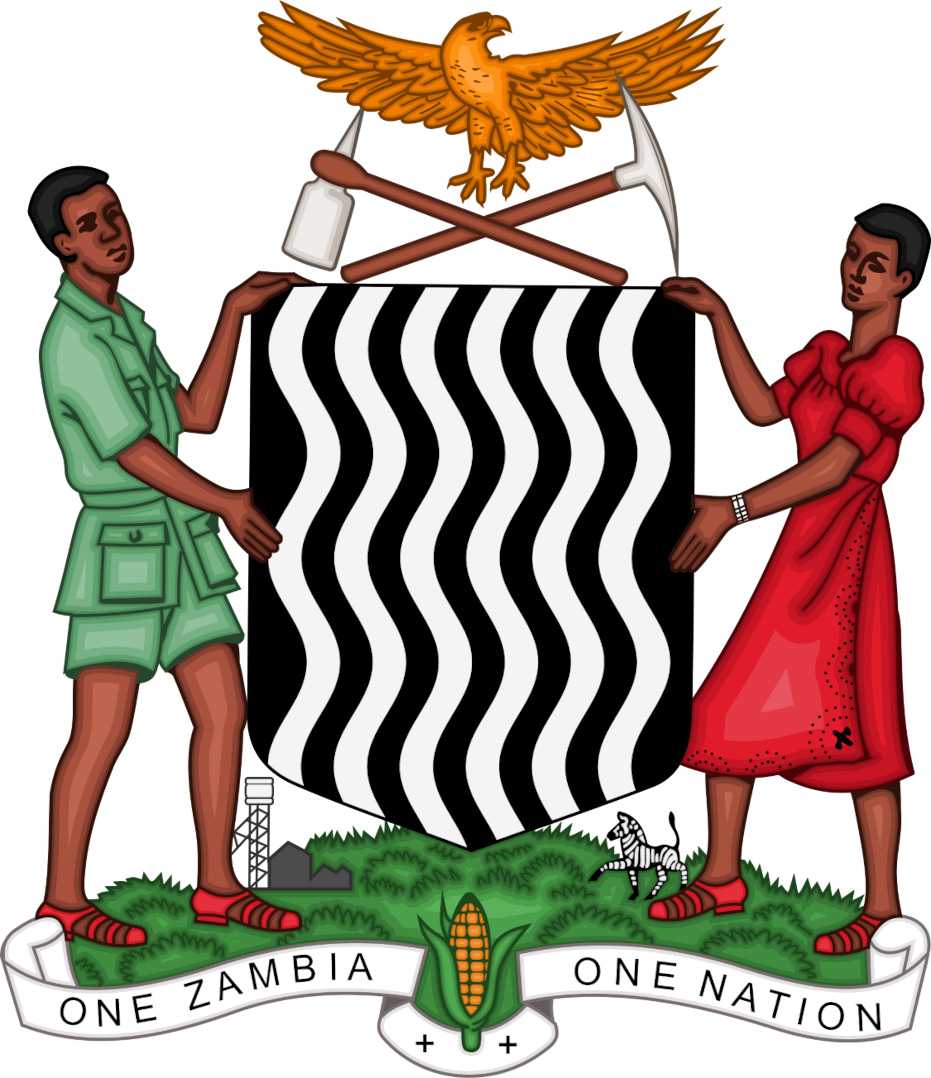
Coat of Arms
The Zambian Coat of Arms, adopted at independence, brings together the key symbols of the nation into a single heraldic design.
The shield at the centre bears wavy black and white lines representing the Zambezi River and Victoria Falls. A crossed hoe and pick above the shield represent Zambia’s agricultural and mining foundations. Below the shield, a man and woman in traditional dress support the shield, representing the Zambian people standing together.
An African Fish Eagle crowns the shield above, consistent with the flag’s imagery. Below the supporters, a scroll carries the national motto: One Zambia, One Nation. Maize cobs flank the lower portion, acknowledging the importance of agriculture.
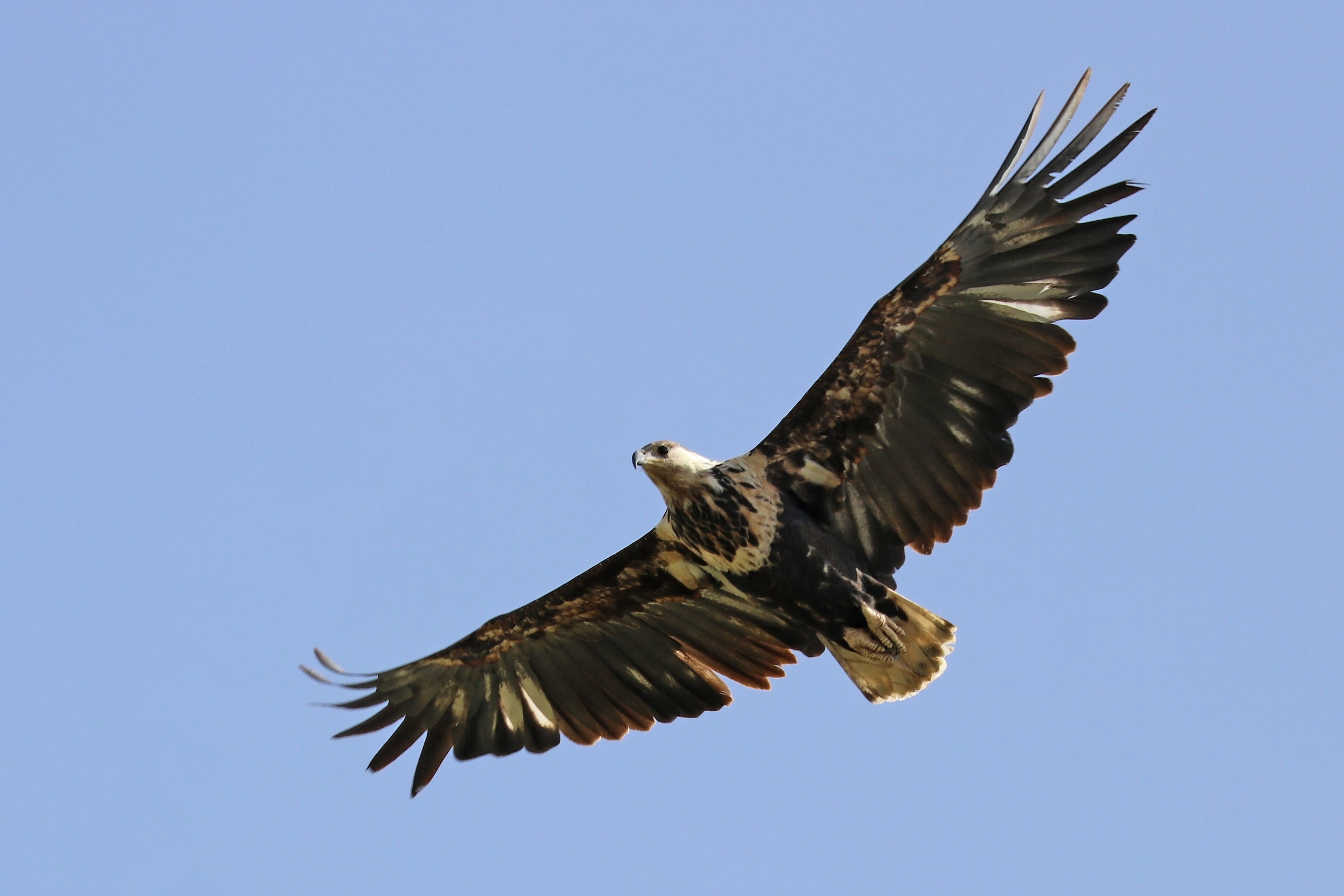
National Bird: African Fish Eagle
The African Fish Eagle (Haliaeetus vocifer) is one of Africa’s most iconic birds of prey and Zambia’s national bird. It appears on both the national flag and coat of arms.
Found near large bodies of open water, the Fish Eagle is famous for its distinctive, far-carrying call — a sound so characteristic of Africa’s waterways that it is often called “the voice of Africa.”
The eagle’s association with Zambia speaks to the nation’s relationship with its rivers, lakes, and wetlands — and to the aspiration to soar above difficulty, expressed in the national anthem’s third verse: “Like our noble eagle in its flight.”
ONE NATION
National Motto & Currency
One Zambia, One Nation was proclaimed by President Kenneth Kaunda at independence and remains the guiding principle of Zambian civic life. It asserts that national identity transcends the country’s many ethnic, linguistic, and regional differences.
The national currency is the Zambian Kwacha (ZMW). The word kwacha means “dawn” or “it is dawn” in several Zambian languages including Bemba and Nyanja. It was chosen deliberately at independence to signify a new beginning — the dawn of freedom after colonial rule.
One kwacha is divided into 100 ngwee — a word meaning “bright” or “light,” continuing the dawn metaphor.